2026 must be the year that Maine gets serious about reducing domestic violence
By Patrisha McLean
“It’s still about the same,” Maine’s retiring Public Safety Spokesperson Steve McCausland said in 2020 about a chief frustration of the job. He was referring to how year in and year out for his 32 years with the Maine Department of Public Safety domestic violence accounted for about half the homicides in the state.
According to the latest Maine crime report, we are still in that rut. Overall, crime in 2024 was down but domestic violence remains a major concern, contributing to nearly half of the year’s 33 homicides.
Home continues to be the most dangerous place, the report shows, with four times as many violent crimes there as in the next highest location of road/parking/camps. Domestic violence counted for more than a third of all aggravated assaults, which often involve strangulation. Intimate partners perpetrated four times more of the reported sex crimes in 2024 than strangers, and half the year’s kidnappings and abductions.
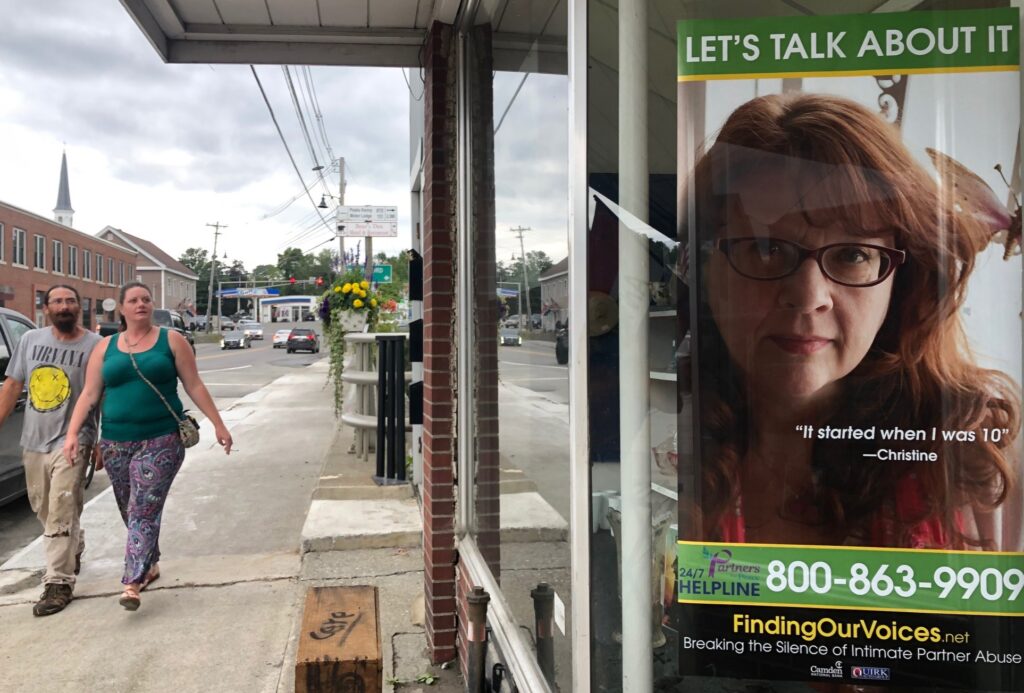
LET’S TALK ABOUT IT — A Finding Our Voices Let’s Talk About window banner was displayed on East Main Street in Dover-Foxcroft in 2020. The aim of the project is to raise awareness of domestic abuse and provide resources for those in need.
How about 2026 as the year that domestic violence is officially declared to be the public health emergency that it is, with across-the-board commitment to bold and different action to finally get us out of this dangerous and disgraceful rut?
I believe this should start with our Democrat and Republican state legislators joining to demand the resignation of Rep. Lucas Lanigan, R-Sanford, who has entered his second year as a Maine lawmaker indicted on charges of strangling his wife.
We need meaningful policy — no more baby steps! — prioritizing the safety of domestic violence victims, as well as police and the general public, over the freedom of perpetrators, and more money for domestic violence survivors and their children, including for housing, legal help, and therapy.
We need all stakeholders to crack open the 2021 study on domestic violence and deferred dispositions, which concluded that probationary-like plea deals handed down by district attorneys to domestic abusers are not effective with this class of criminal. They also need to read Barry Goldstein’s “The Quincy Solution,” which lays out how three towns successfully reduced domestic violence with a coordinated community response that included strict enforcement of criminal laws, protective orders and probation rules, together with practices that made it easier for victims to leave their abusers.
Gov. Janet Mills has convened an Opioid Response Summit for seven years, gathering state and national leaders to “share ideas, strategies, and best practices to help Mainers affected by the opioid crisis. The program includes keynote speakers and breakout sessions with the voices of persons in recovery featured prominently.”
Let 2026 produce the first annual Maine summit on domestic violence, prominently featuring the voices of victims/survivors.
Voices like Katherine Erbes, the guest on my latest podcast.
In 2012 in the Bath area her ex-boyfriend savagely stabbed her with a steak knife that broke on her collarbone. He was facing 30 years. His sentence was six and a half years.
Five years after his release from custody, in 2022 in Ellsworth, Matthew Wycoff was charged with strangling another girlfriend, while on probation, and while reportedly telling her “I think it’s funny that you think you are going to live.”
A plea deal in 2023 netted a prison sentence of seven years, so until 2030, but Katherine said she was told his release date has been moved to 2028 and that he is currently on inmate work release.
From Katherine, the last words: “My daughter and two of her best friends cleaned up my blood while I was in surgery fighting for my life. If I was gonna ask for anything, I would say stiffer sentences, and before the next woman dies.”
McLean is the CEO and founder of Finding Our Voices, a grassroots and survivor-powered nonprofit devoted to breaking the silence of domestic abuse in Maine including providing meaningful resources for women and their children. For more information visit https://findingourvoices.net/.