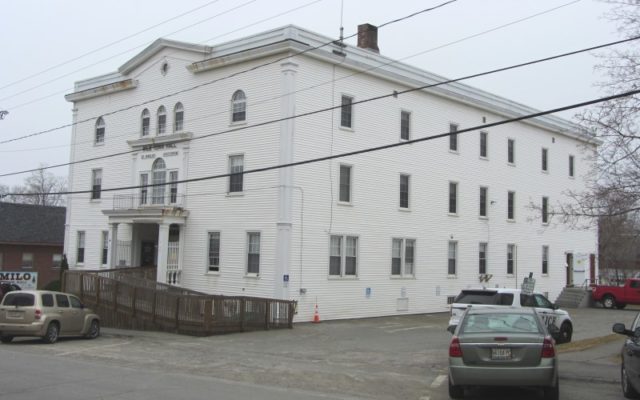
Milo to vote on land use ordinance in November
MILO — The town of Milo will vote on a municipal land use ordinance on the November ballot.
The community currently has no such measure in place. The proposed ordinance would bring the town into state compliance and balance property rights with community development protection. Its wording could still change over the next few months.
“Nobody’s saying this is the be all, end all, “ Select Board Vice Chair Lee McMannus said during a June 17 public hearing. “There are changes that need to be made, I am quite certain.”
Town officials do not want to tell property owners what to do with their land.
“I think there’s plenty of people in this town who want some protections against their property, too, which is also in here,” McMannus said.
Town Manager Bob Canney and Code Enforcement Officer Steve Quest reviewed a proposed land use ordinance that was rejected a dozen years ago. Milo’s legal counsel reviewed it.
Communities without individual land use ordinances will need to follow the Maine Uniform Building Code by default. A municipal ordinance can be tailored to the town’s specific needs.
Building permit requirements will be a key component in the proposed land use ordinance.
Adding steps to a home may be fine without a permit, but a bigger addition such as a deck would need approval.
“That’s the tool that we use to let the assessor know that you made a change to your property or to your house,” Canney said.
The town isn’t telling a property owner they cannot construct a garage, Canney said, but making sure it is built correctly and not infringing on a neighbor’s property lines.
“These things are already required by the state. The town is just not in compliance,” he said.
The land use ordinance guides how land is developed and used, Quist said.
The ordinance would define how to keep conflicts to a minimum, protect residents’ investments in their properties and safeguard public health and welfare. . Growth and development would be managed to protect natural resources.
“In practical terms, a land use ordinance answers questions such as where can your business be located,” Quist said. “What setbacks are required for property lines? What permits are needed for new construction? How are shoreland areas protected? What standards apply to subdivisions and commercial development?”
The ordinance defines what activities are permitted in each section of Milo.
“This here is just a guideline as to protecting our investments of what we have and how we can go ahead in the future,” Quist said
The land use ordinance is different from a property maintenance ordinance, Canney said.
“It’s a starting point to protect future expansion and future growth that puts the power in the hands of the people,” he said about the land use ordinance.
Existing structures not in compliance could be grandfathered. A garage too close to a property line would likely receive a variance and wouldn’t need to be torn down or moved.
Another public hearing on the land use ordinance would be held prior to the November election after public feedback has been incorporated into the ordinance.
Comments can be emailed to Canney at townmanager@townofmilo.org or dropped off at the town office.