‘A freight train ready to crash’: Inside Penobscot County’s $7M budget crisis
By Marie Weidmayer and Kasey Turman, Bangor Daily News Staff
Penobscot County leaders neglected a budget crisis for years that could crush residents with a nearly 20% tax hike in 2026, according to former county commissioners and budget committee members.
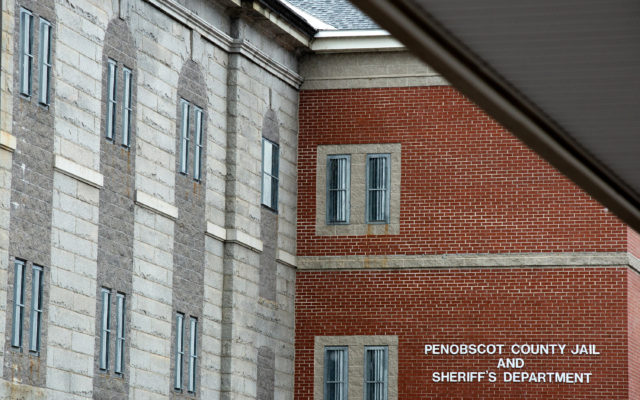
Soaring costs of the Penobscot County Jail created a budget gap that emerged in 2021. The jail’s expenses grew as police arrested more people than the building could hold, forcing the county to pay to board inmates in other counties.
That shortfall has grown every year since, and now stands at more than $3.5 million in the proposed 2026 county budget.
During that time, county leaders did nothing to stop the jail’s growing expenses and failed to convey how serious the budget gap had become, former Penobscot County Commissioners and members of the budget advisory committee told the Bangor Daily News.
Instead, the county used surplus tax dollars — known as its undesignated general fund balance — which bled nearly $7 million during that time and now need to be replaced.
Interviews and reviews of budgets and meeting minutes reveal for the first time that decisions commissioners made over several years contributed to a budget crisis that now threatens to inflate the tax bills of more than 150,000 people in Penobscot County unless cities and towns drastically cut back their own spending.
Since 2021, commissioners approved budgets that were higher than the county’s tax revenue with the hope that the state would eventually provide additional money.
“It was a freight train ready to crash,” Laura Sanborn, a former Penobscot County commissioner, said of the budget. The problems were just starting to emerge when the Democrat lost her bid for reelection in 2022 to Republican David Marshall, who is still in the role.
Residents now face a potential 19.79% tax hike to cover the shortfall in next year’s budget, as the budget advisory committee prepares to meet again on Thursday. That tax hike would likely be just the first step for Penobscot County to recoup the money.
Budget problems begin
Commission Chairman Andre Cushing, a Republican, told the BDN that 2021 was the “critical year” that the county’s budget started getting out of control.
That year, Maine started flat funding jails, which means the amount of money the state provided to its 15 county jails did not increase yearly. The state has provided the Penobscot County Jail just under $3.6 million every year since.
Without more funding from the state, a $1.9 million gap formed in the Penobscot County Jail’s budget in 2021.
Since then, commissioners approved budgets “hopeful” that the state would provide more money, Cushing said. A review of meeting minutes showed that the budget was approved unanimously by commissioners every year since 2021. However, approval of the 2023 budget is not reflected in any meeting minutes.
The jail has averaged an annual shortfall of $2.7 million during that time, Cushing said.
That also comes as the Penobscot County Jail’s budget grew more than any other jail in the state — 165% since 2015, growing from $5.9 million that year to $15.7 million in 2025, an analysis of the state’s 15 county jails showed.
Meanwhile, Cumberland County — which has about twice as many people as Penobscot County — has increased its jail budget just 28% during that same time.
Boarding costs, which have jumped from $55 to $100 per inmate since Marshall was elected in 2022, are why Penobscot County is facing a shortfall while other counties are not, Marshall said.
When asked why the commissioners didn’t address the budget gap sooner, Cushing said, “We’ve gone to the Legislature every year strongly advocating with other jails for increased funding.”
Instead, commissioners covered the gap with money from its undesignated general fund balance.
Using those tax dollars worked initially because the county was running on a surplus and didn’t have any debt, retired commissioner Peter Baldacci said. He left the office in 2024 after 36 years.
That gap kept getting bigger and Baldacci, the lone Democrat on the commission during that time, said he didn’t have the power to get the other two Republican commissioners — Cushing and Marshall — to make changes.
Baldacci said he was “not happy” with how the commission was depleting the fund balance.
While Sanborn, the former commissioner, said there are no changes she would have made to the way the budget worked before she left office, she said she did call for audits of the county’s finances to be completed.
“Looking at monthly finance reports, it’s pretty hard to put the whole picture together,” she said. “The audit puts everything together at one time.”
Penobscot County received its 2021 audit on May 15, 2025, and its 2022 audit on July 31, 2025.
A backlog of audits for municipalities, school districts and counties has plagued the state for years due to a shortage of auditing firms in Maine.
The 2023 audit is supposed to be done by the end of the year, said former County Administrator Scott Adkins, who resigned from his position effective Nov. 7. The county will have a better understanding of its financial hole once that is complete, he said.
Lack of scrutiny
The advisory committee that reviews the county’s budget was not given enough time to look over the proposals and wasn’t told of any possible shortfalls by the commissioners, a former committee member said.
Dan Tremble was on the 15-member budget advisory committee for years. He previously served as county treasurer from 2006 to 2018 and replaced Baldacci on the Penobscot County Commission this year.
But even if he and the rest of the advisory committee knew about funding deficits, the budget still would’ve been approved, he said.
“I think [the committee] would have approved the jail budget in the past. I think they would have said, ‘Listen, we need to fund it, and the deficit, we can’t just keep letting it grow and using undesignated reserve funds to pay for this,’” Tremble said.
The committee has passed Penobscot County’s proposed budgets unanimously since 2021, except for one year. Former Brewer Mayor Michele Daniels and former Bangor City Councilor Rick Fournier opposed the proposed 2024 budget.
More meetings were held about the budget and more information was made available to the group prior to the COVID-19 pandemic, said Joe Perry, the Maine state treasurer who held a seat on the committee for more than 30 years.
Perry is not on this year’s budget advisory committee.
Committee members are not scrutinizing the budget, nor would they be able to do so anyway because they know less about the process the commissioners are using when they draft the budget, he said.
“This committee would never have the ability to uncover mistakes or funny business,” Perry said.
Penobscot County employs a number of people who work directly with county finances who claimed that the budget discrepancy was not their responsibility.
Adkins, who served as county administrator from 2022 to 2025, told the BDN in 2023 that his job was to carry out what the commissioners voted on. Gary Lamb was hired as an interim administrator in November for six months while the county searches for a full-time replacement.
Similarly, treasurer Glenn Mower said he is not responsible for the budget or its approval; he just manages it once it’s approved.
Mower was elected in 2022 and replaced John Hiatt, who served one term. Hiatt was sentenced to 10 days in jail in December 2022 after he pleaded no contest to misdemeanor theft and harassment charges.
Hiatt declined to comment.
Penobscot County has also seen a rotating cast of finance directors annually since 2022. Brenda Palmer, who has the role for the 2026 budget, referred the BDN to the commissioners when asked about her role in the county’s finances.
What happens next
The budget committee met on Dec. 11. If the members can reach an agreement, the budget will be sent to the commissioners for a final vote.
The commissioners do not need to follow the recommendation of the budget committee. A unanimous commission vote can override the committee’s recommendations.
The nearly 20% tax hike would likely only be the first step in solving the county’s finances, Adkins said at the November budget meeting. That amount only addresses the $3.4 million gap in the 2026 jail budget. Additional measures will need to be taken to replenish the $7 million that has disappeared from the general fund, which could further stretch Penobscot County residents’ wallets.
To limit the burden of the 2026 budget, Baldacci said there are immediate changes to it that would make sense.
He would freeze hiring for new positions, as well as freeze raises for department heads and elected officials. Travel budgets should be reduced as well, he said.
But the crisis won’t be fixed without a hard look at the whole criminal justice system, Baldacci said.
There’s not one person or group that’s responsible for the budget crisis, but “a lot of people responsible,” Tremble said.
“You can point fingers all day,” he said. “I’m not really sure ultimately how this got to this level, but we’re at the point now we just have to fix it.”