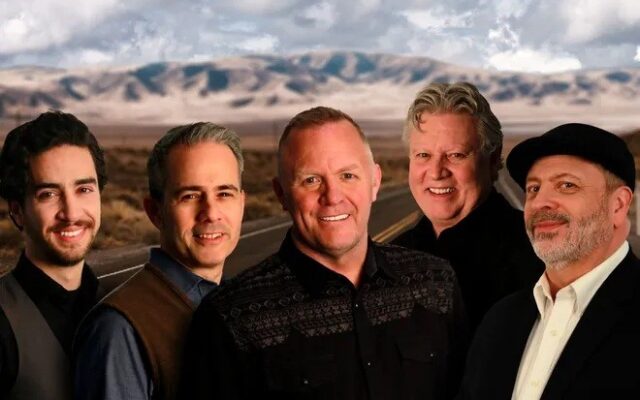
Rock Hearts will return to the Center Theatre
By Emily G. Adams
DOVER-FOXCROFT — One of the hottest bluegrass bands in New England, Rock Hearts, returns to Center Theatre for the fourth consecutive year Saturday, Oct. 17. With it comes Billy Thibodeau, a “quiet” guy while attending Guilford-area schools whose lifelong musical career landed him in the Maine Country Music Hall of Fame in 2024.
The 7 p.m. concert caps a full day including a 3:30-5 p.m. meet and greet with the band and 1-3:30 p.m. fiddle workshop, all detailed at the websites of both Center Theatre and the Bluegrass Music Association of Maine.
The evening will feature selections from the band’s recently released, all-gospel album “One More Valley”. Formed in 2013, the band welcomed Thibodeau in 2018 and self produced their first album, “Starry Southern Nights” (2020). “Albums Rock Hearts” (2022), “Wanderlust” (2023) and “Unfinished Bridges” (2024) are on The 615 Hideaway label based in Nashville.
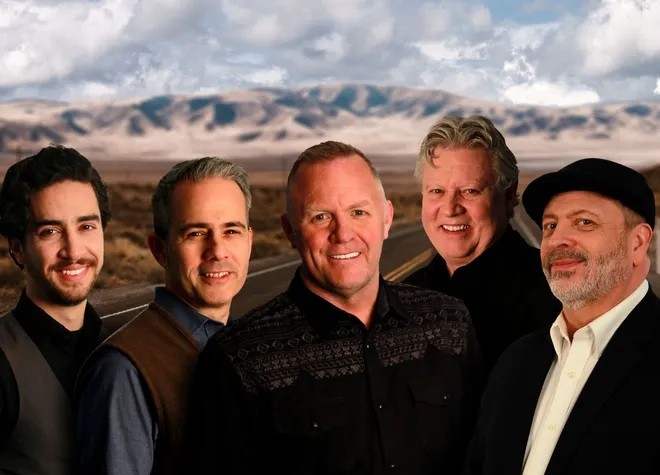
ROCK HEARTS — Acclaimed Southern New England bluegrass band Rock Hearts will return to the Center Theatre on Saturday, Oct. 17, for a full day of performances, workshops and storytelling sponsored by the Bluegrass Music Association of Maine.
Thibodeau contributes on mandolin and sings tenor and is endorsed by Saga Musical Instruments, maker of two mandolins he uses: a newer one for live concerts; and an older one, a Kentucky KM-1500, for recording albums gifted by his “mandolin hero” and friend, Jimmy Gaudreau from the Washington, D.C. band The Country Gentlemen who has played with artists like Emmy Lou Harris. On his website, Gaudreau details all the mandolins he has owned and praises Thibodeau.
Rock Hearts band is one of just 30 juried artists chosen by a competitive application process to perform Oct. 20-21 in Chattanooga, Tennessee at the International Bluegrass Music Association’s annual “Ramble” that showcases rising talent.
They are also getting national exposure through regular airplay on SiriusXM Bluegrass Junction station, and by inviting Rhonda Vincent (“This is Why”) and Danny Paisley (“Lonesome Man in a Lonesome Town”) to do guest spots.
Thibodeau dabbles in creating songs. He and Maine-based songwriter Stan Keach collaborated on “Lonesome Man in a Lonesome Town” and “Whispering Waters”, for example. Keach has observed Thibodeau’s trajectory since the 1980s. “He’s been a top professional ever since, and he’s gotten better.”
Rock Hearts’ music is a “modern take on traditional bluegrass,” explained Thibodeau in a recent interview. “We’re still considered a traditional bluegrass band because of how we approach it and the vibe and the licks that we use to present our music.”
Founder Joe Deetz (banjo), Alex McLeod (guitar), Rick Brodsky (upright bass) and Austin Scelzo (fiddle) comprise Thibodeau’s “musical brothers”.
McLeod’s singing has a special authenticity. “He’s a storyteller more than he is a singer,” Thibodeau said. “Every word that comes out of his mouth is from his heart and people see that from miles away and our job as the rest of the band is to support that to the best that we possibly can.”
The band loves every song that they play. “We’re very particular about how we rehearse these songs. And they have to be right in our minds and we all have to be happy with it and it shows,” Thibodeau explains. “There’s none of this ‘Aw, we’re going to do this one again?’ No. There’s none of that.”
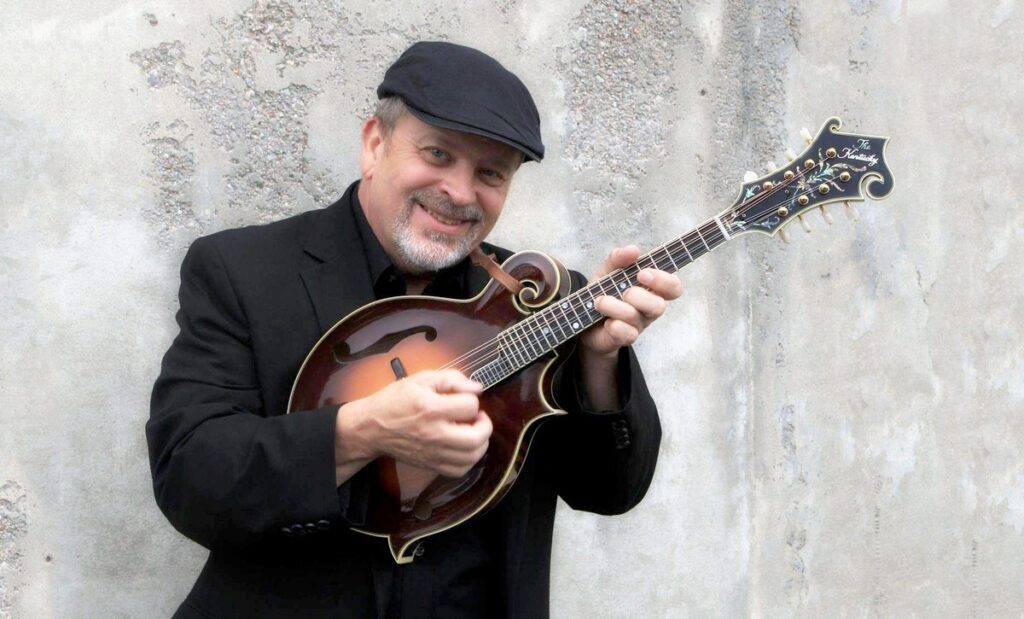
Thibodeau felt a chemistry with Rock Hearts immediately. In 2018, he was originally only sitting in for a one-off rehearsal because their mandolinist could not make it. Things got good, fast. “We start playing and it was only just the first song, after a verse and chorus,” he recalls. “We just kind of started looking at each other and said, ‘What kind of just happened here?’” So they kept playing — for a few more hours. Their mandolinist told the band: “If you can get that guy, that’s who you need in your band, is Billy Thibodeau.”
The band originally formed in 2013 as Rock Hearts in honor of the self-proclaimed king of bluegrass, Jimmy Martin, and his famous song by the same name. Off stage, the band bonds over Martin songs and knows about a third of his library.
When McLeod realized Thibodeau was the son and nephew of legendary bluegrass musicians Sam and Bob Tidwell, they bonded. McLeod’s father used to talk about the Tidwells all the time, which made Thibodeau seem like a long, lost brother. They have been great friends ever since.
Warner “Sam Tidwell” Thibodeau, the son of Rhode Island Philharmonic violinist Bill Thibodeau, got into bluegrass after he first heard it in the 1950s. He attended the very first festival dedicated to bluegrass in Fincastle, Virginia, in 1965. By the late 50s, early 60s, he was in a folk trio with entertainer Martin Mull, whose agent recommended the stage name Sam Tidwell as less ethnic and easier to pronounce.
Tidwell performed with luminaries Don Reno, Arthur Lee “Red” Smiley, Malcolm Bell “Mac” Wiseman and Jud Strunk. When Tidwell’s own young family was living in Connecticut and Rhode Island, it was not uncommon for musicians like the Osborne Brothers, Joe Val, Jimmy Gaudreau, Don Stover and Red Allen to stop by the house. In Maine, he counted humorists Kendall Morse and Tim Sample among his friends.
Tidwell’s very best friend and musical partner was Fred Pike. The two, as young men, had run a music store together in Plainfield, Connecticut. Where Pike went, Tidwell went, for the most part. When Pike moved to Cambridge, Tidwell saw a house for sale on the Ripley Road in Cambridge and bought it. They pioneered bluegrass in Maine with the Kennebec Valley Boys. The bluegrass buzz in Cambridge also attracted Bob and Grace French, who became major figures in Maine bluegrass.
Tidwell has been honored by the National Bluegrass Hall of Fame (Pioneers of Bluegrass exhibit), Boston Bluegrass Union (Heritage Award, 2011), Maine Country Music Hall of Fame (inducted in 2013) and Rhode Island Bluegrass Alliance (inducted 2018).
Thibodeau decided to perform under his real name for tax-return and music-royalty purposes. By the 1990s there was less likelihood of Thibodeau “being an ethnic name anymore,” he said. “Surprisingly enough, it still was, but not in a negative connotation.”
Tidwell and Thibodeau are one of several father-son inductees in the Maine Country Music Hall of Fame. Thibodeau’s sister, Lyn Roak, who is on the board of directors and gives tours at the museum located at The Silver Spur in Mechanic Falls, takes great pleasure in pointing out her family’s contribution to bluegrass in Maine. “I’m so proud of both of them.”
His other siblings — David in Maine, Kathleen in Rhode Island and Marc in Florida —are also supportive. David helped him out quite a bit growing up with learning to sing.
Schoolmates were in the dark
The youngest of five children, Thibodeau was given a mandolin at the age of 3 and a half, recalls Roak, who was six years older. Their father had moved the family to Virginia to perform with Red Smiley, purchased an old motel and converted the restaurant into a music store. “Billy kept picking up this particular mandolin and dad told him, ‘If you’re going to pick it up and play with it, you’re going to learn how to play it’. And so dad taught him a few little songs and he just had the desire and the talent.”
This was about the time their mother died at the age of 33 from a burst gall bladder.
At the age of 6, he was chopping mandolin and knew a couple melodies. His first paid performance was at age 8 at Colby College, a one-off affair with his father David and famous Kentucky banjo maker Jimmy Cox, who was living in Brunswick.
Tidwell’s second marriage lasted four years. A third marriage was to his high-school sweetheart Edie, who was the love of his life. The kids called her “mom”. She had sang for Tidwell’s father, who, after the philharmonic, was part of a big band and also did barn dances.
By age 12, Thibodeau accompanied his father in the East Benton Fiddler’s Contest on guitar. They took second place. “That was a pretty amazing time,” he says. They played three songs, ending with Orange Blossom Special.
Roak remembers that song played around the house, along with a bluegrass version of “Hello Mary Lou”, “Fox on the Run” and “Long Black Veil”. She has an album on her mantlepiece with Dick Curless on one side and Katahdin Valley Boys on the other. The number of recordings they made was considerable. Aug. 5, 1976, news coverage in a local paper said they started every show with “Hello City Limits”.
The country life suited Tidwell. “They had ducks and chickens and a Bullmastiff named Woof and cows and sheep,” Roak said.
Prior to Maine, Tidwell had worked for Raytheon Corporation. His other jobs, besides owning a couple of music stores, included with the Federal Housing Administration. In the early 1990s, he was a substitute high school math teacher in Dexter. He went by Thibodeau, not Tidwell, there, but insisted the students call him Sam, not Mr. Thibodeau.
Tidwell and Pike each ran separate bluegrass festivals, drawing hundreds of attendees to this town whose population even today is under 500: the Central Maine Bluegrass Festival and the Salty Dog Bluegrass Music Festival.
Tidwell’s was at Yonder Hill Campground in Madison in the mid-1970s and then relocated to his farm on the Andrew Ham Road in Cambridge. They moved to Florida by the mid-1990s. Pike’s was across the road from his home on the Ham Hill Road in Cambridge.
Mike Watson, Cambridge selectperson since 2017, remembers those festivals fondly. “It was like re-visiting family,” he said. “You stopped the modern day and stepped back in time with the old-time music.” They were all good people. “I never ran into a bluegrass musician or singer who wasn’t decent,” he said. They were “someone you’d invite in for a cup of coffee.”
The festivals provided business to the local convenience store, which is now closed, and to the garage in a small but strong economic boom. “I wish somebody would come in and do it again.” The fire department’s food booth at Salty Dog netted $18,000 profit one year, says Watson, who baked 25 to 30 loaves of yeast bread for the booth to make things like toast in the morning for hungry campers.
In middle school, Thibodeau would sit at home with a mandolin, guitar and fiddle and learn every song he knew on all three instruments, going back and forth between them, learning by ear.
One day, his dad entered the living room and asked how serious he was about bluegrass. “I really do like it, and I really do like the mandolin,” he assured his father, who then dug out a crate of bluegrass albums and set them down and suggested he start listening. “If I asked for help, absolutely, he would give it 100%,” Thibodeau reflects. “It’s hard for a parent to teach their children those types of things. So, he gave me the resources instead.”
One album in that crate, in particular, caught his ear: the crystal clear, clean mandolin playing and beautiful tenor voice of Jimmy Gaudreau. His father personally knew Gaudreau, a native of Rhode Island and arranged for them to meet and, if they met at jams, Gaudreau would give tips to Thibodeau.
The mandolin style of Sam Bush of the New Grass Revival also appealed to him. And, of course, his father was a big influence, teaching songs, playing old fiddle and Irish tunes together in the living room and attacking the mandolin a little differently.
In high school, his father occasionally needed him to fill in with a band. He would go on the road with them, play a couple of shows and meet other musicians. By then, he had gotten the bug for bluegrass.
As for school, he went home after the bell. No sports, clubs or other extra-curricular activities. Yearbooks on file at the Guilford Historical Society only show his annual, homeroom photos and Class of 1981 picture. He did just two years of band: trombone in sixth grade and guitar in the jazz band his sophomore year.
People at school did not exactly know what the family did, exactly, let alone their role in bluegrass in Maine. “I think we — all of us — kind of kept that part of our lives separate,” Roak said.
People knew Billy Thibodeau played music, but not to what degree until his junior year, 1979-80. By then, people had seen him play at events and festivals. “I kind of kept it a secret, for the most part, until it became cool,” Thibodeau said. He did a couple of local gigs a month or went on the road with his father until graduating.
He did four years in the Air Force (1981-85), with his first duty station in Myrtle Beach, South Carolina, and met a couple of bluegrass guys, including a Virginian who knew a lot about the genre. “When I wasn’t working, we were playing music. It was a lot of fun.” His specialty was maintaining the A-10 Warthog. He was sent to Suwon, South Korea, and found a similar group of players. His stint ended at George Air Force Base, California.
While in South Korea, country music star Dottie West was on base doing a USO tour. Thibodeau was not planning on going to the show, was tired, planned to eat his chili and go to bed. But a stranger heard rumors he played bluegrass, urged him to get his instruments and said he should play with her.
“Who are you to tell me I can play with Dottie West?” he asked the stranger. “Number one, I’m her sound man. Number two, I’m her husband. Trust me, she will go nuts over this.” So he retrieved his instruments, went to the green room, and West entered, all excited. They played three or four songs. “It was awesome. Place went absolutely bonkers to see one of their own playing with Dottie West.”
Thibodeau loved what he did in the Air Force, was good at it, and was planning to volunteer to go to Saudi Arabia. But “there was some scuttlebutt, and apparently my dad was fully aware of that,” he recalls. “My dad kind of saw through that and didn’t want me to be part of that.” He was 21.
Instead, his father found him a job with the Bangor-based Bluegrass Supply Company, which toured the Eastern Seaboard and Canada from 1985 to 1994. His Union River Band toured New England from 1998 to 2004.
He also performed with White Mountain Bluegrass from New Hampshire, Descendants of Bluegrass, North Country Bluegrass, Breakneck Mountain Band, Stan Tyminski & Blue Diamond and Anna Mae Mitchell & Rising Tide.
He started a home studio in Bangor that merged with a friend, Andrew Clifford, to become Main Street Studios. Thibodeau designed and built their first two studios.
To help raise a family, he took a day job working with people with special needs and also worked for an outpatient brain injury rehab program. His daughters still live and work in Bangor. In 2012 at age 48, he left Bangor and the studios relocated across the river to Brewer.
He moved to Rhode Island where he lives with his life partner and bass player, Debbie Hall. “This is my home now. I absolutely love it here.” Hall was the brainchild of what became the Rhode Island Bluegrass Alliance co-founded with others. He formed the Bill Thibodeau Band and performed mostly in Rhode Island. He taught music and worked at Rick’s Music in Cumberland, Rhode Island until retiring in June.
After joining Rock Hearts in 2018, they booked a showcase at New England’s famous Joe Val Bluegrass Festival President’s Day weekend in Framingham, Massachusetts that year. They played 25 minutes to a full house and, when they returned to the instrument cases, there was a line of talent buyers and promoters waiting for them. They played the main stage there in 2019 for 45 minutes and the crowd went “bonkers”.
They have been on an upward trajectory since.
Cancer won’t stop him
Two years ago, Thibodeau had his heart tested and doctors kept him. They did a CT scan, found cancer in his right lung and did a biopsy, which came back positive. So, in early 2025, he underwent two surgeries back to back: quadruple bypass; and to remove one third of his right lung, followed by chemotherapy. He gave permission to Bluegrass Today online news to report on his condition. He missed only three or four music gigs. He performed several shows in June, a couple in July and a New York tour in August of last year.
CT scans will continue every four years until he is cancer free. A recent scan came back positive for nodules in his left lung. Doctors cannot remove them. He will undergo radiation and chemotherapy. He granted permission to include this news here.
Will it interfere with his playing? “I won’t let it,” he said. “If any way possible I can play music, that’s what I’m gonna do.”