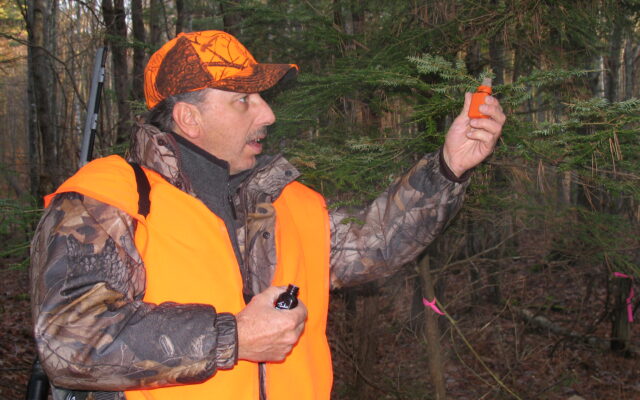
Other states are banning deer urine lures. Is Maine next?
By Al Raychard
Deer hunters like an edge, an advantage that increases the chances of success, if only slightly. The popularity and increased use of tree stands in recent years is a prime example. According to a 1993 magazine survey, 9.5 million of the 11 million U.S. deer hunters surveyed, or about 86%, used a tree stand. My wife and I fall within that percentage.
The popularity of urine-based deer lures is another example. I’m old enough and have hunted long enough to remember when these products were something of a novelty. Today, scent-control and lure products can be found on the shelves of practically every sporting goods store that sells hunting equipment.
Personally, I’ve never had much use for most of them. I don’t arrow a deer or fill my tags every year. Perhaps if I did, my success rate would be higher, but year in and year out, I do all right.
I do have friends and acquaintances who have used products designed to attract deer or negate a whitetail’s olfactory advantage for years and who swear by the edge they provide. Unless they’re telling hunting yarns, I don’t believe they tag out every year either, but that’s a whole different story for another time.
The use of natural deer urine products has taken on a different significance with the spread of chronic wasting disease, or CWD.
CWD was first recognized in captive mule deer at a Colorado research facility in the late 1960s. The first documented case in a wild cervid was identified in Colorado in 1981. The disease has since spread across much of North America. As of June 2026, CWD had been documented in 37 states and five Canadian provinces, but not in Maine or elsewhere in New England. New York detected CWD in two wild deer in 2005, but no additional cases have been detected in wild deer there since.
CWD is a fatal neurological disease caused by infectious proteins called prions. Prions can be shed in bodily fluids, including saliva, urine and feces, and can persist in the environment for years. CWD can spread through direct contact between animals and through contaminated soil, plants, food and water.
To help prevent the possible spread of CWD into Maine, the Maine Department of Inland Fisheries and Wildlife implemented an emergency rule in 2018 restricting the importation of cervid carcasses and high-risk body parts from all jurisdictions except New Hampshire. I remember it well because I was still hunting caribou in the province at the time and making occasional trips to Anticosti Island, Ohio and other states for deer.
The rules allow hunters to bring back boned-out meat, hardened antlers, cleaned skull caps, hides without the head, teeth and finished taxidermy mounts. Those restrictions remain in effect.
Because CWD can be detected in urine, wildlife officials have raised concerns about natural urine-based deer lures, which are often made from urine collected from captive deer or elk.
There is no direct evidence that a commercial urine lure has introduced CWD into a wild deer population, but wildlife agencies are concerned about the potential risk.
Several states have responded by banning or restricting natural deer urine products. Connecticut’s prohibition took effect in 2007. Vermont prohibited them beginning in 2016, Rhode Island adopted a ban in 2018 and Massachusetts prohibited deer-derived scent attractants beginning in 2026.
New Hampshire has taken a different approach. It does not prohibit natural urine-based lures, but its Fish and Game Department strongly discourages their use and recommends synthetic alternatives because of the potential CWD risk.
That leaves Maine.
At present, Maine does not ban natural urine-based lures. But MDIFW tells hunters not to use urine-based lures and instead recommends synthetic, non-urine-based products. The department says there are no standardized or widely accepted protocols for testing commercial deer lures for CWD prions and recommends using synthetic products until further research can show that deer urine does not contain infectious prions.
The scent industry has also taken steps to address the concern. The Archery Trade Association launched its Deer Protection Program in 2016, and the Responsible Hunting Scent Association took over management of the program in 2021. The program establishes guidelines and safeguards for manufacturers of urine-based scents.
Some manufacturers also have their urine products tested using RT-QuIC, a laboratory method designed to detect very small amounts of abnormal prion protein. Products that have undergone this testing may carry an RT-QuIC-tested label.
But those industry safeguards do not mean natural urine products are legal everywhere. States such as Vermont, Connecticut, Rhode Island and Massachusetts prohibit natural deer-derived lures regardless of industry certification.
For now, Maine has taken a precautionary approach without banning the products outright. The state restricts the importation of high-risk cervid parts and recommends that hunters use synthetic lures instead of natural urine-based products.
The question is, for how long?