Dexter educator selected for STEM advocate program
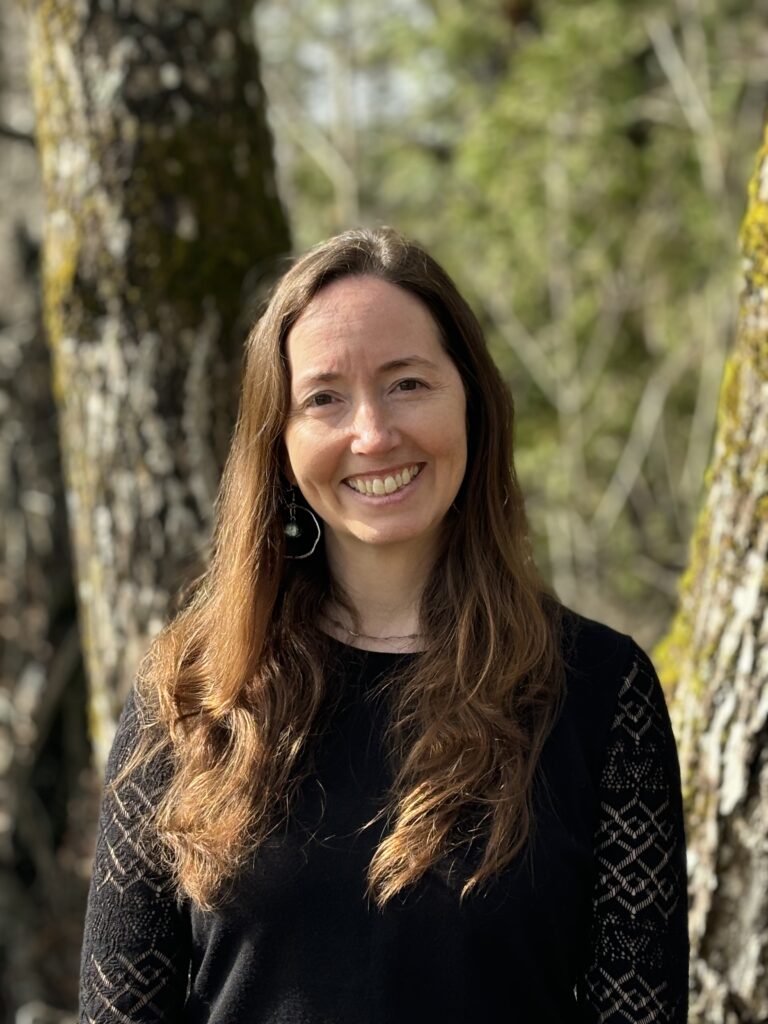
DEXTER — Dexter Regional High School science teacher Alyson Saunders is one of 100 educators from across the country chosen for the Society for Science 2026-27 Advocate Program to help advance STEM research programs.
Through professional development, stipends and year-round support, the Advocate Program empowers teachers to help students pursue original research opportunities and participate in science competitions. This will help them build confidence, strengthen critical thinking skills and discover new pathways into science, technology, mathematics and engineering.
This year’s cohort has 13 lead advocates to mentor 87 advocates in a nationwide network of educator leaders working to expand STEM opportunities. Of the 87, 21 are returning and Saunders is one of 66 new advocates. She is the only teacher selected from Maine for the program and one of three from New England.
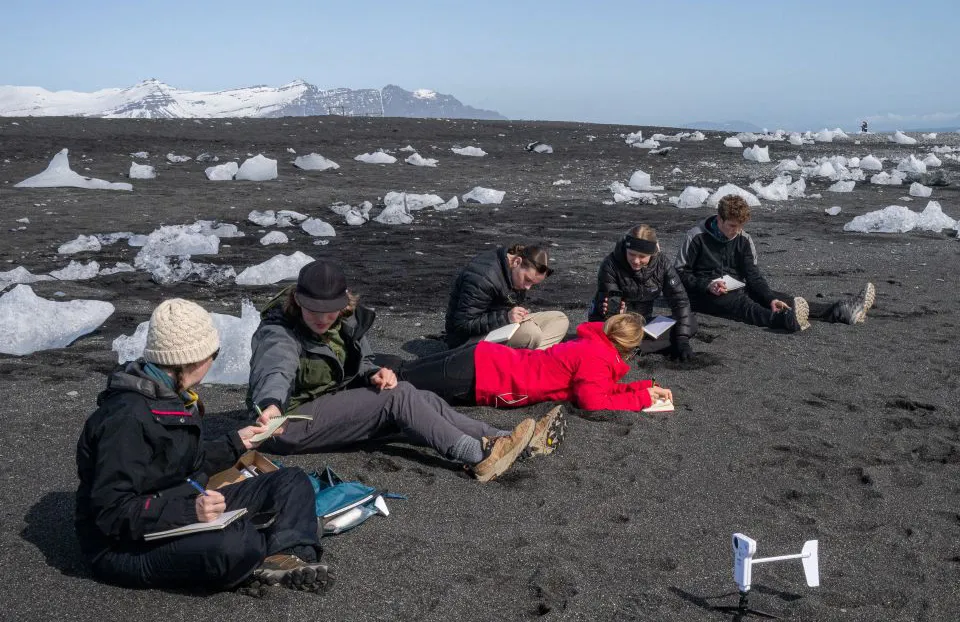
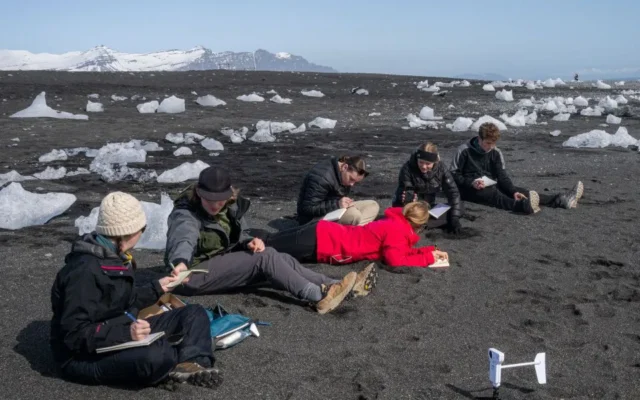
RESEARCH IN ICELAND — Students of Society for Science 2026–27 Advocate Alyson Saunders of Dexter Regional High School, receive instruction on how to make observations using their senses to enrich Pasco sensor data collection in a glacially influenced coastal environment — Diamond Beach, Iceland.
“Society for Science has a system, like an application process, for teachers and educators who are interested in helping in either growing their programs for student independent research or who have never had a program but want support in building a program,” Saunders, who has been teaching in Dexter for nearly two decades, said. “Basically their goal is to help educators build their programs to get more students into STEM research.”
This year the Society for Science is awarding a total of $326,000 to support expanding student access to pursuing science research and participating in science competitions. Lead advocates are receiving $5,000 each and the 87 advocates will receive $3,000 each.
“The most powerful way to expand opportunity for young people is to invest in the educators who recognize their potential and help turn their curiosity into discovery,” Maya Ajmera, president and CEO of Society for Science and executive publisher of Science News, said in the advocate program selection announcement. “Congratulations to our 2026–2027 advocates. Together, they will strengthen STEM education, share innovative approaches and open doors for more students to see themselves — and thrive — as the scientists, engineers and innovators of tomorrow.”
“We have to do a set of goals throughout the year,” Saunders said. She is in a small region-specific cohort of less than 10 teachers meeting monthly to work with a lead advocate.
“During that meeting we talk about our goals for the year and where we are with those,” she said. “There is a report we have to do three times a year and some of that (professional development) is helping with the reporting.”
“It’s about supporting and hearing ideas from other people,” Saunders said. Meeting participants collaborate on what they do to incorporate STEM into their classes, how they retain students and how do they bring new pupils into the programs.
Students in rural Maine have limited exposure to STEM-based careers, Saunders explained on the Society for Science website .
“In our area, the medical profession, forestry and construction tend to be what students see most,” she said. “There is a need to provide as much STEM programming as we can. They need to have exposure to new ideas, practice scientific thinking and participate in opportunities where they see their peers doing STEM. Competitions of all kinds are powerful ways to accelerate learning. They teach young people how to be flexible, overcome challenges and learn from failure. I am excited about working with others to figure out how to better leverage these kinds of opportunities to strengthen my students’ experiences with STEM. Being an advocate is an opportunity to enrich my student’s lives and hopefully give them the confidence to pursue STEM-related careers.”
Saunders will learn about different competition opportunities as an advocate.
Currently her students participate in the Maine State Science Fair and in the past a Dexter team has competed in the Thomas Cup at Thomas College in Waterville.
A possibility for future Dexter student participation is the Regeneron Science Talent Search with judging conducted online
“Students submit applications so it’s not just the research that they did but who they are as a researcher and how it connects to their life. It’s almost like applying to college a little bit,” Saunders said. They need to think about how to present themselves and how to write about their research.
A student of Saunders’ applied last year but was not accepted to the highly competitive program so she hopes to learn more to help her pupils in the future.
Dexter students may also enter a robotics video competition, learning how to explain their project in a different way.
The various state contests will help students see they have many peers across Maine and beyond who have similar STEM interests which should help inspire them, Saunders said.
Over the years she has worked with teachers at the Tri-County Technical Center on the Dexter Regional High School campus and encouraged interested students to pursue opportunities there. Saunders teachers nearly every Dexter student in the required biology class.
Saunders worked with TCTC Natural Resource Program educator Stephany Perkins last year and Saunders was a chaperone on a field trip to Iceland for Perkins’ students.
Participants were able to expand their knowledge by learning how to conduct field research.
Another international field trip is planned for February, with TCTC natural resource students traveling to Costa Rica to experience a tropical climate.
Saunders has a goal of having a STEM endorsement on a student diploma or transcript. She hopes the Society for Science Advocate Program will provide support and guidance on implementing this distinction.
The Advocate Program recognizes the essential role educators play in helping students move from pursuing independent research to sharing their work in competitions. Advocates guide students through the process, helping them identify appropriate competitions, navigate application requirements, meet important deadlines and communicate their research effectively. Along the way, students strengthen their scientific reasoning, communication and problem-solving skills while gaining valuable experience that can open doors to future educational and career opportunities inside and outside the STEM pipeline.
Since its launch, the Advocate Program has supported 439 educators. Together, these educators have supported more than 9,100 students, including more than 6,700 who have submitted over 12,000 entries to STEM competitions. Many students participate in multiple competitions, reflecting the sustained engagement and growing impact of the Advocate Program.
This year’s cohort brings together educators from public, charter and private schools and one university. They bring diverse perspectives and expertise from classrooms, museums, after-school programs and community organizations, enriching the Advocate Program cohort with a wide range of experiences and approaches. Over the coming year, they will build lasting professional relationships, exchange innovative ideas and integrate new strategies to inspire and support the students they serve.
The 2026–27 Advocate Program is made possible through the generous support of the Arconic Foundation, DoW STEM through the Defense STEM Education Consortium and Regeneron.