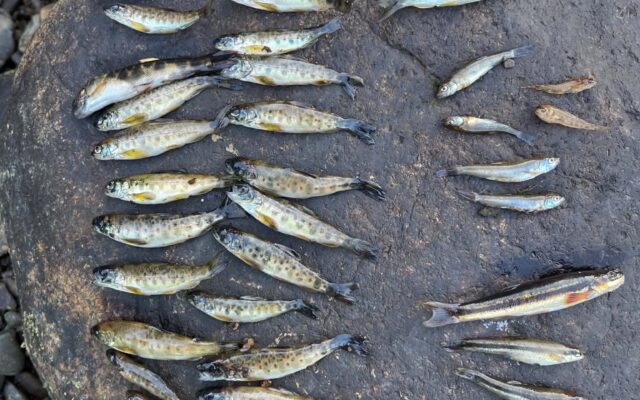
Thousands of fish may have died in Penobscot River dam shutdown
By Susan Bard, Bangor Daily News Outdoors Editor
A sudden July 27 shutdown at a dam on the West Branch of the Penobscot River may have killed thousands of fish, leaving Maine anglers and guides warning that a nationally recognized cold-water fishery is being put at repeated risk.
A downed power line triggered a “trip event” around 4:30 p.m. at McKay Station, which is about 30 miles west of Millinocket near Baxter State Park and Ripogenus Dam. The event automatically shut down the turbines.
Water levels on the West Branch then fell from about 2,400 cubic feet per second to roughly 450 cfs almost instantly and stayed there for more than two hours, according to Chris Howe, river manager at New England Outdoor Center, who was at Big Eddy Campground along the river when it happened.
It marks at least the second time in three years that an unplanned outage at the dam has drastically cut river flows, following a similar 2023 incident. This one revived criticism of Brookfield Renewable, Maine’s dominant dam owner, its equipment maintenance and its response times when things go wrong.
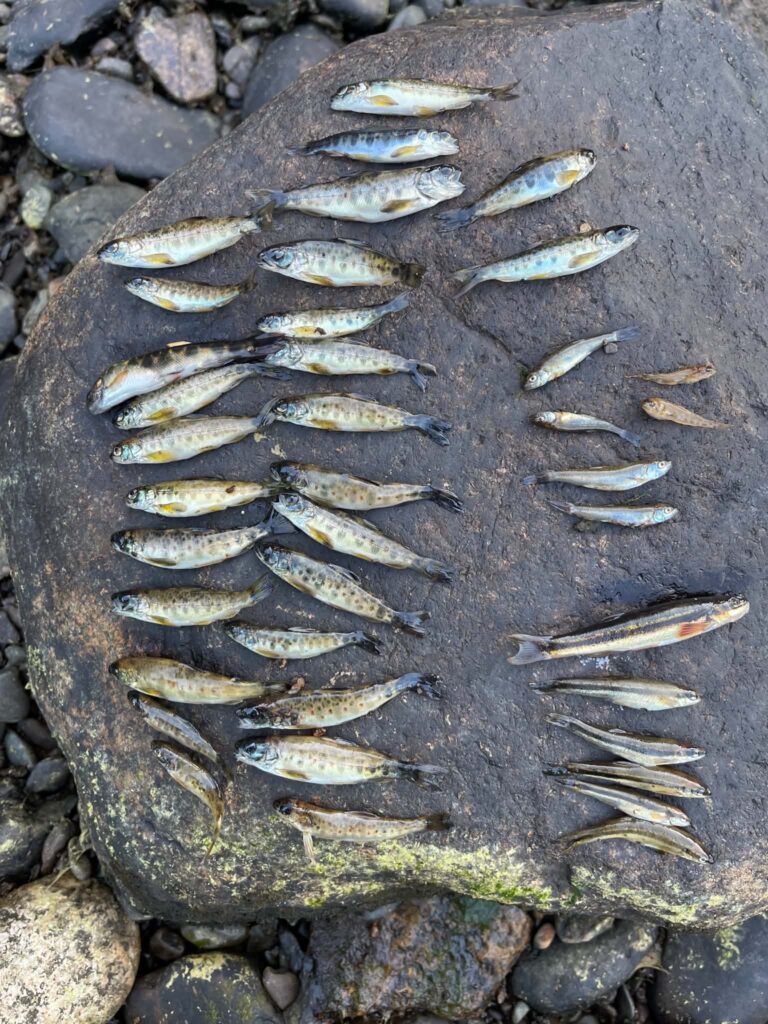
FISH DEATHS — Juvenile fish were found stranded and dead along the West Branch of the Penobscot River after a sudden drop in flows following a turbine shutdown at Brookfield Renewable’s McKay Station.
“When we first arrived we saved probably two dozen fish that were still alive,” Howe said. “We found 39 dead brook trout, landlocked salmon and a few other species.”
Howe and another person counted those fish while searching just 100 yards of shoreline for about 90 minutes. He believes similar die-offs occurred elsewhere along the river. One biologist estimated that thousands of fish, including young landlocked salmon, could have died due to the event.
Smoke rising from the transmission line carrying power from McKay Station to Millinocket prompted campers at Big Eddy to fight hot spots with backpack fire pumps until Maine Forest Service crews arrived around 6 p.m. Registered Maine Guide Todd Mercer of Horizon Line Adventures said 8 to 10 feet of shoreline was exposed as the river receded.
“It’s not the first fire along this power line,” Mercer said. “It’s not the first fire caused by a failed crossarm on a power pole. And it’s not the first fire Brookfield has been responsible for.”
A Brookfield spokesperson did not immediately respond to a request for comment. The Maine Department of Inland Fisheries and Wildlife is investigating, regional fisheries biologist Jeff Bagley said.
“We are currently investigating how this occurred, how long this event lasted, what the flows were during the event and what impacts there were to fish,” he wrote in a statement.
A similar shutdown three years ago at the same dam cut flows to about 100 cfs for several hours after lightning damaged equipment, which conservationists said also killed fish and aquatic life.
This week’s outage renewed attention on a 2022 Brookfield study, conducted at the request of Maine Trout Unlimited, that simulated a rapid drop to 500 cfs and documented roughly 450 stranded fish across nine species, about half of which Brookfield estimated died. Using that data, retired fisheries biologist Neal Hagstrom preliminarily estimated 3,800 to 7,700 juvenile landlocked salmon died in Monday’s shutdown.
McKay Station’s FERC license requires minimum summer daytime flows of 2,000 to 2,300 cfs, but that threshold drops to just 400 cfs during a generating-unit outage, a level critics say fails to protect fish during sudden shutdowns.
The latest incident renewed calls for Brookfield to improve electrical infrastructure maintenance and boost on-site staffing at McKay Station to speed response times, said Steve Heinz, chairman of the Maine Council of Trout Unlimited.
A letter has already been sent to the Federal Energy Regulatory Commission to investigate whether Brookfield’s flow management adequately protects the West Branch fishery, including a review of monitoring and mitigation requirements tied to the dam’s license.
A video posted by Magalloway River Farm in western Maine showed exposed river bottom following a different turbine shutdown on that river near another dam owned by Brookfield. The video states water levels have exposed clinger nymphs, caddis larvae and other aquatic insects to dry conditions, reducing an important food source for fish.
“That might be the reason we don’t have great hatches on the Magalloway,” the post said. “It’s very discouraging.”