Hospitals warn of dire consequences if Maine bill makes health care cheaper
By Annie Rupertus, Bangor Daily News Staff
A new push to cap hospital charges in Maine could make health care more affordable — but hospitals warn it could lead to service cuts or even closures.
A bill in the Maine Legislature is proposing a cap on hospital charges that could help those struggling with insurance premium increases and medical debt. Supporters say it’s a necessary measure to combat unsustainable hikes in health care costs for families and businesses, and that similar caps in other states are a sign that it could work here.
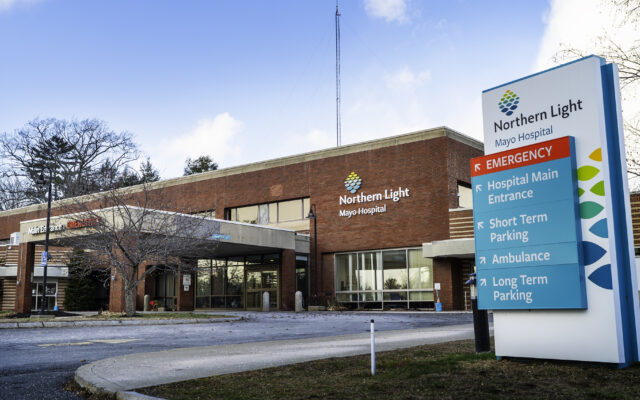
Northern Light Health, the largest hospital system serving central and northern Maine, is taking a strong stance against the bill as it struggles to recover from years of financial setbacks. The health system lost $15 million last year.
“I’m afraid of a health care collapse,” Northern Light President Dr. Guy Hudson said, referring to what would happen if the bill passes.
People on both sides of the debate agree that health care affordability is a major problem in Maine, and the proposal highlights the particularly dire situation facing patients in the state and many of the hospitals that serve them. It’s unclear to what extent the proposed cap could improve Maine’s struggling health care system.
The Maine Office of Affordable Health Care brought forward the proposal after identifying hospital services as the largest portion of health care spending in Maine, outpacing prescription drugs and other spending areas.
“If we want to meaningfully improve affordability and change the trajectory for Maine people, we really need to get at those underlying costs,” Meg Garratt-Reed, the agency’s executive director, said.
The nonprofit Consumers for Affordable Health Care is supporting the proposal as advocates point to skyrocketing health care costs.
“More than 4 out of 10, almost half of Maine families, are struggling with medical debt,” said Executive Director Ann Woloson. These families owe about $4,500 on average, according to survey results released Thursday by Woloson’s organization.
“Hospitals continue to raise their prices every year,” said Rep. Drew Gattine, D-Westbrook, the bill’s sponsor. “And that translates directly into higher insurance rates for working people and then also higher out-of-pocket costs for working people and a very large cost for businesses.”
Hudson said he understands where the bill’s proponents are coming from, but at the same time, “Maine is a very fragile ecosystem of care,” he said.
The bill proposes capping hospital prices at 200% of what Medicare reimburses for a service.
This would effectively cut reimbursement rates for privately insured patients by about 30%, according to Maine Hospital Association President Jeffrey Austin. Across all hospitals, that will result in a one billion dollar loss, he added.
Hospitals need to charge privately insured patients to offset losses associated with government payers, according to Hudson.
“The cost of care is more than what Medicare and Medicaid reimburse,” he said. Medicare reimbursements cover 83 cents per dollar spent in hospitals, according to the American Hospital Association.
Northern Light is reimbursed by government payers at 80% of the actual cost of care, according to James Rohrbaugh, the health care system’s executive vice president and chief financial officer.
Hudson and Austin both warned that reducing hospital revenue could lead to closures, service cuts and job losses. Hudson couldn’t provide an estimate of how many jobs Northern Light would have to cut.
Northern Light already closed its Waterville hospital and walk-in clinic last year, decisions that the hospital system said helped reduce its debt.
In the face of price capping, hospitals would have to cut services that don’t make a profit, Austin said, which tend to be outpatient services like pediatrics, substance use and mental health. These services also tend to be disproportionately utilized by Medicare and Medicaid patients, he added.
A spokesperson for Covenant Health, which runs St. Joseph Hospital in Bangor, deferred comment to Austin.
Supporters of capping hospital prices also point to other states that have implemented similar measures, such as Oregon and Rhode Island, where a group of Brown University researchers have found that caps reduced costs without a major impact on finances or quality of care.
“If the goal is to lower insurance premiums and make health care more affordable, I think this is the lowest hanging fruit and the policy that across everything else has been the one that’s been proven to be the most successful,” said Christopher Whaley, a health policy professor at Brown.
“Every market is unique. I think the general principles still hold though,” he said of Maine’s proposal.
But critics say it’s impossible to draw a fair comparison between Maine and these other states.
“It’s an apples and oranges comparison,” Hudson said. “Hospitals that are running a positive operating margin or have a higher cash flow, they can absorb this with minimal change. This is not Maine. Maine can’t support that.”
Hospital leaders say they’re already bracing for losses because of the federal budget reconciliation bill, which will cut about $5 billion from MaineCare.
Northern Light is expecting a $27.3 million loss because of these cuts, Hudson said. About 65% of Northern Light’s revenue comes from MaineCare, Medicare and Medicaid.
He expects that the price-capping bill would result in a $220 million loss for Northern Light.
Maine’s 18 critical access hospitals, a designation referring to small, rural hospitals, would be exempt from the price cap, as would hospitals that the Office of Affordable Health Care determines to be in financial distress, although the bill does not specify exactly how the agency would do this.
Hudson said he believes the cap and resulting service cuts would dramatically change the health care landscape in Maine.
“We’ll have more people leaving the state to get their health care because a lot of services will need to close, because we can’t afford to provide the service anymore,” he said. “We would just be handling emergencies. It’d be like we’re a triage state.”
Other provisions in the bill would set a cap on hospital price growth and a minimum for what health insurance companies have to pay for primary care and behavioral health care.
The bill is now in front of the legislature’s health and human services committee.
“This is not an attack on hospitals. We care about hospitals. We need to keep hospitals open,” Woloson said of the proposal. “But at the same time, we have to consider the effect rising health care costs are having on Maine families.”